
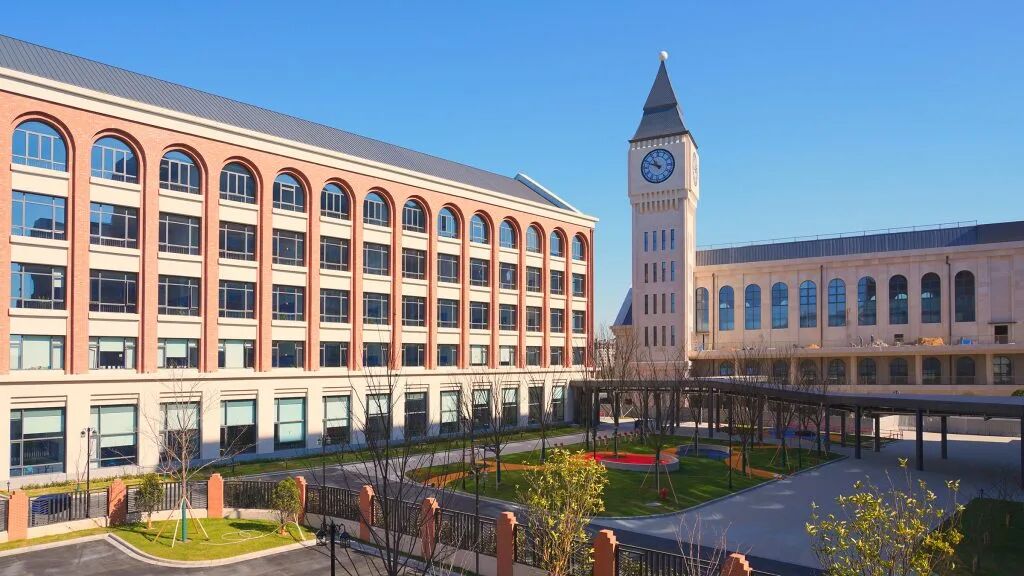
Online anxiety has surged recently following claims from numerous parents that Wycombe Abbey School Nanjing is preparing to close its doors. Sources close to the matter reveal that the school has already convened a private meeting with parents, where it confirmed the Nanjing campus will halt operations once the current semester concludes.
Pupils will continue their classes until the end of the term. After that, the school will offer them transfers to other Wycombe Abbey campuses located in Changzhou, Hangzhou, or Hong Kong. Additionally, the school is looking into opportunities at future campuses in Southeast Asia as alternative options. It is reported that tuition fees will stay the same, and the school has even arranged shuttle services and boarding discounts to facilitate a smooth transition. For families who are unable to move, the school has pledged to assist in placing their children in local public or private schools.
A parent disclosed that the foreign principal, academic vice principal, and several teachers will be transferred to Wycombe Abbey School Changzhou.
What makes this development particularly notable is the rapid reversal of the school’s fortunes. Established in 2021 and affiliated with a renowned British school brand, Wycombe Abbey School Nanjing was once regarded as a leading example of international education in the city. Boasting high-end facilities—including indoor heated swimming pools and theater-quality performance centers—and with annual fees reaching nearly 200,000 yuan, it firmly established itself in the high-end segment of the market. Many parents selected the school not only because of its reputation but also due to its focus on “holistic education,” an approach that their children truly embraced.
However, behind the scenes, enrollment figures paint a different picture. It is reported that student numbers peaked at approximately 500 two years ago but have since dropped to below 400. Analysts note that the school would need a minimum of 600 students to reach break-even point.
High operational costs have further added to the pressure. Maintaining a 1:1 foreign teacher ratio, recruiting staff on a global scale, and upkeeping top-notch facilities all demand substantial financial input. Without adequate enrollment, this operational model becomes increasingly unsustainable.
The wider context also plays a role. Nanjing has long been a city dominated by public education. Most families still favor the domestic education pathway, and even those interested in international education often prioritize international divisions within public schools over private institutions. Coupled with the strong appeal of elite public school networks, many private schools have struggled to attract top students.
Recent data highlights this imbalance. In 2025, among 22 private high schools in Nanjing, only four managed to fill their enrollment quotas, while the rest fell short—some by a significant margin. This trend indicates that the demand for private international-style education in the city may not be as robust as previously anticipated.
At present, the school has not released an official public statement, leaving uncertainty about whether the campus will be completely shut down or merged into another location. Regardless of the final outcome, this incident has already served as a clear indication of the changing landscape facing international education in China’s second-tier cities.