A road collision in Jinan, Shandong, between a Russian university student and a Chinese local resident laid bare two typical worries behind their compensation disagreement. The hurt resident feared the foreign student might depart China before settling his payout, whereas the student, unfamiliar with China’s legal provisions, was anxious about being asked to cover unreasonable or repeated fees.
The crash took place in June 2026. At that time, the Russian senior student collided with the resident while carrying out an unsafe overtake on an electric bicycle. Traffic police ruled the student bore full liability for the incident.
Negotiations over compensation quickly stalled, which prompted the injured party to file a lawsuit with the court.
Once the case was accepted, the plaintiff reached out to Judge Wang Fudong, who oversaw the case. He voiced his anxiety that the student could head back to Russia without honouring the compensation order.
“If he leaves the country without paying up, how will I afford my ongoing medical care? I cannot afford to bear this injury and its costs all by myself,” the plaintiff told the judge.
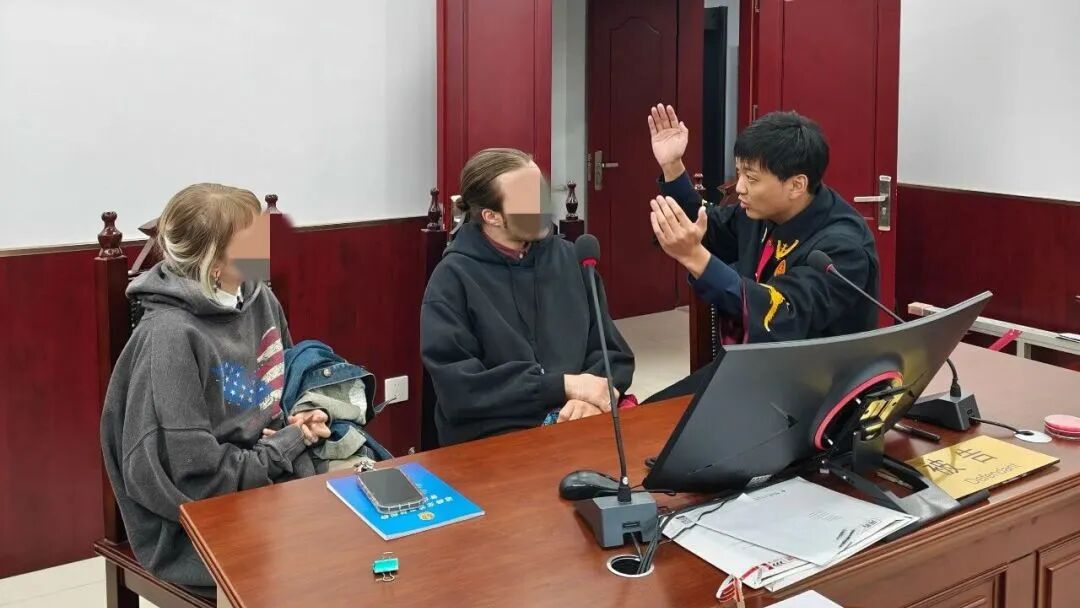
The judge got in touch with the Russian student and summoned him to the courthouse, reminding him to bring an interpreter. The student turned up the next day alongside his wife, who is also Russian.
Recently married, the student told the judge that the young couple had tight finances, and his parents back in Russia did not have much money either. His main fear was that the injured resident would make overblown compensation demands and plunge him into heavy financial hardship.
There was also confusion over China’s compensation standards.
After reading the court’s compensation guideline, the student raised a question: since he had already promised to cover all medical bills, why did he still need to pay for the hospitalized person’s food allowance and nutrition fees? He suspected these two items amounted to double charges.
The judge clarified that the two items have separate functions under Chinese law. The hospital food allowance covers regular meals during hospital stays, while nutrition costs are meant to support the victim’s physical recovery. To make the distinction clearer, the judge compared regular daily meals to extra nutrient-rich food for recuperation.
Once the student gained a clearer grasp of relevant laws and litigation procedures, he expressed willingness to resolve the conflict constructively. The judge then arranged a joint mediation session for both sides.
Knowing the student’s limited financial situation and his sincere attitude to take responsibility, the injured resident softened his stance and accepted a repayment plan by instalments, instead of demanding one full lump-sum payment. He even volunteered job leads at cross-border trading firms for the student, hoping the student could secure income to pay off the debt.
After an afternoon-long mediation, both sides signed a settlement deal.
Upon receiving the first instalment, the plaintiff delivered a thank-you banner to the court to recognise the judge’s patient work.
The Russian student shared that he had pictured the court as a stern, daunting place at first. He was touched by the judge’s friendly attitude and patience in walking him through every legal step.
This case reflects two common difficulties in cross-border civil conflicts. Victims often face the risk of unenforceable compensation if foreign defendants leave Chinese territory. Meanwhile, foreigners without knowledge of local laws may find it hard to follow compensation calculations and judge whether each charge is legitimate.