China Central Television (CCTV) reported on Monday that Jiangsu provincial authorities have released the results of an investigation into the handling of cultural relics at the Nanjing Museum, including the disappearance of certain items from its collection.
The inquiry revealed that five paintings were illegally transferred in the 1990s and early 2000s to a provincial cultural relics company and subsequently sold, leading to the loss of state-owned cultural property.
Investigators determined that Xu Huping, former executive deputy director of the Nanjing Museum, failed to adhere to proper procedures and unlawfully approved applications to move the relics in question. Despite a clear national ban on unauthorized sale or disposal of museum holdings, Xu went ahead and authorized the transactions.
Xu was also found to have neglected serious internal management issues within the company, such as mismatches between accounting records and actual assets, improper consolidation of duties that should have been segregated, and insufficient supervision and checks. These failures are suspected to constitute grave dereliction of duty, according to CCTV.
In addition to Xu, disciplinary or legal action has been taken against 24 other individuals linked to the case. Those suspected of criminal conduct have been referred to judicial authorities.
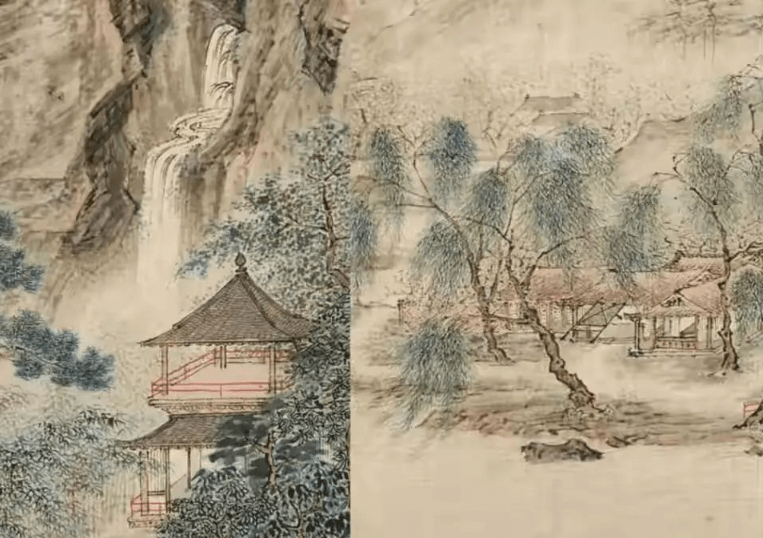
The controversy first came to light on December 19, when descendants of the late distinguished collector Pang Laichen discovered that five of the 137 ancient paintings and calligraphic works their family had donated to the Nanjing Museum in 1959 could not be found. The Paper later reported that one missing piece—Spring in Jiangnan, a handscroll by Ming Dynasty master Qiu Ying—appeared at a preview exhibition of a Beijing auction house in May, valued at 88 million yuan (about $12.5 million).
The investigation traced Spring in Jiangnanback to July 1997, when Zhang, then a storekeeper and salesperson overseeing the painting and calligraphy storeroom at the former provincial cultural relics company, noticed the handscroll—already transferred without authorization—was priced at 25,000 yuan. Spotting a profit opportunity, she colluded with her boyfriend, Wang, to purchase it themselves and resell it at a markup. Using her position, Zhang changed the price tag to 2,500 yuan.
To bypass rules barring company employees from buying items sold by their firm and to keep Wang’s identity hidden from colleagues, Zhang arranged for Wang’s coworker, Chen, to pose as the buyer. On July 8, Chen bought the scroll from the company via Zhang at a 10% discount, paying 2,250 yuan. To disguise the tampering, Zhang left the item number blank on the invoice, omitted the buyer’s name, and mislabeled the piece as “Landscape Scroll Imitating Qiu Ying” rather than Spring in Jiangnan.
Zhang then told Wang to falsely present the scroll as a family heirloom and sell it to art dealer Lu (formerly legal representative of Nanjing Yilanzhai Art Co., Ltd., deceased in 2025). They agreed to sell Spring in Jiangnanalong with two other paintings for 120,000 yuan. Beginning in 2016, Lu used the scroll as collateral in three separate loans to Nanjing Shizhuzhai Art Investment Co., Ltd. When Lu defaulted on redemption in September 2019 due to financial troubles, the handscroll remained in Shizhuzhai’s possession.
In November 2021, art dealer Zhu acquired the scroll from Shizhuzhai. In April 2025, China Guardian Auctions was engaged by Zhu to put the work up for sale, but the auction was halted in May after Pang Shuling reported it. On December 28, 2025, the handscroll was finally returned to the painting and calligraphy vault of the Nanjing Museum, according to the investigation.
CCTV noted that the incident highlights long-standing institutional weaknesses and managerial chaos at the Nanjing Museum, especially regarding the absence of rigorous, standardized protocols for managing donated objects and the lax enforcement of relevant laws and policies. A handful of officials and staff displayed slack discipline and inadequate legal awareness, ultimately causing the loss of state assets and damaging the public trust in state-run museums. The case offers sobering lessons, the report stressed.
That same Monday evening, the Nanjing Museum issued a public apology, acknowledging that the episode exposed enduring institutional flaws and disorganized management, weak policy implementation, and a lack of due respect toward donors and their families.
In particular, the museum admitted that in handling the transfer and circulation of Spring in Jiangnanand other artworks, it contravened regulations set by national cultural heritage authorities by improperly removing items from the collection. Review and verification processes had become perfunctory; applications for relic transfers were filed incorrectly; and the handover process was marked by gross negligence, the museum stated.