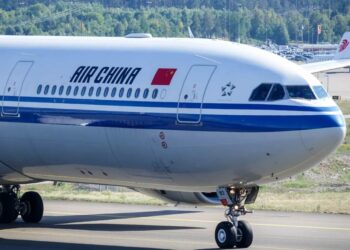

On November 27, the Beijing No. 4 Intermediate People’s Court held a press briefing focusing on foreign-related and cross-strait commercial trials. During the event, Ma Juntong, President of the Beijing International Commercial Court, shared several landmark cases—including one that starkly illustrates how far some travelers will go to deflect responsibility for personal mishaps onto airlines, even when evidence contradicts their claims.
The Case: A “Convention-Shopping” Attempt After a Routine Mishap
In August 2017, a German national surnamed Zhang arrived in Beijing and suffered a fall on an airport escalator. His luggage had gotten in his way, leading to the accident. Rather than treating this as an unremarkable incident, Zhang sought to reclassify it as an international aviation “accident” under the Montreal Convention—a global treaty governing airline liability. His argument? That flight attendants failed to assist with his luggage, did not escort him to meet his family, and “rushed” him off the plane, thereby causing his fall. Based on these claims, he demanded compensation for medical expenses, lost income, luggage damage, and interest.
Court Rejects Claims: No Link Between Airline Actions and Injury
The court dismissed Zhang’s case, and its reasoning was unequivocal. The Beijing Fourth Intermediate Court clarified that international aviation law defines an “accident” strictly as an unexpected, unusual event unrelated to the passenger’s own conduct. Routine airline practices—such as reminding passengers to disembark or declining to carry their luggage—are standard industry norms and do not constitute hazards. Airlines are not obligated to act as porters, nor can they be held liable for a passenger tripping over their own belongings on a standard airport escalator.
Crucially, the court found no legal causal connection between the airline’s actions and Zhang’s injuries. In plain terms: his fall stemmed directly from his own mishandling of luggage, not from any wrongdoing by the crew.
Appeal Upheld: Core Ruling Stands
Zhang appealed, but the higher court affirmed the original judgment. While it adjusted a minor technicality regarding legal application, it fully endorsed the central finding: the airline bore no responsibility for a passenger’s self-inflicted accident.
Why This Matters: Setting Boundaries for Liability and Accountability
This case serves as a textbook example of courts pushing back against frivolous claims and the misuse of international aviation frameworks. By clarifying the definition of an “accident” under the Montreal Convention, the ruling draws a critical distinction between standard airline service and scenarios warranting genuine liability.
It also delivers a vital message: Passengers must take ownership of their safety. International conventions cannot be stretched to hold airlines accountable for ordinary, foreseeable incidents rooted in a traveler’s own actions.