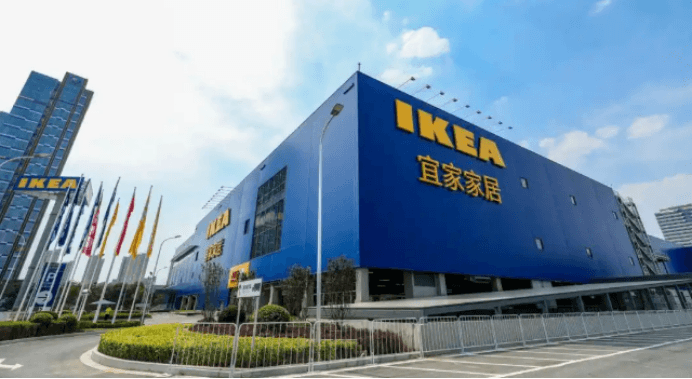
Citing JLL data, Ingka Group has put eight wholly-owned Chinese properties on the market, spanning key cities including Shanghai, Guangzhou, Tianjin, Harbin, Nantong, Xuzhou, Guiyang, and Ningbo. Currently vacant and free of lease encumbrances, these assets offer immediate delivery to prospective buyers. Situated in prime commercial or emerging development zones with clean land titles, the sites are primed for repositioning as build-to-rent residential complexes, community retail hubs, mixed-use cultural-tourism ventures, or corporate headquarters.
Notably, seven of these locations previously housed IKEA’s large-format big-box stores prior to their synchronized closure in February. The Guiyang site, which ceased operations in 2022, rounds out the portfolio. This divestment marks a pivotal strategic pivot for IKEA in China. Historically reliant on a capital-intensive model of acquiring suburban tracts for sprawling warehouse-style stores, the firm is now contending with dwindling foot traffic and mounting fixed costs. Fiscal 2024 saw sales drop 7.6% year-on-year, remaining over 30% below 2019 peaks.
In response, IKEA China is optimizing its operational footprint by transitioning from heavy-asset expansion to a nimble, omnichannel strategy. The recent opening of a compact-format store in Beijing’s Tongzhou District and a new quick-commerce trial with Taobao—promising one-hour delivery in select cities—underscore this shift. The success of this transition in revitalizing the brand’s competitiveness remains a critical watchpoint.