
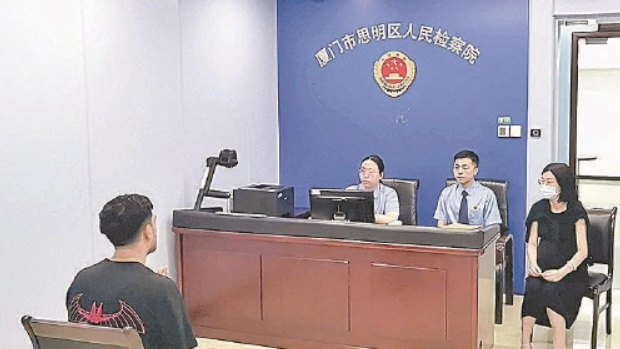
On June 10, 2025, tears filled the eyes of Sa, an international student, as he received a notification from the Siming District People’s Procuratorate. The document confirmed their decision not to prosecute him. Overcome with relief, Sa pledged to strictly abide by Chinese laws and successfully complete his academic journey in China.
Sa’s trouble began with a moment of negligence. While studying in China, he drove a vehicle after consuming alcohol. A subsequent test revealed his blood alcohol concentration was 88.77 mg/100 ml. Legally, this figure sits below the 150 mg/100 ml threshold that typically triggers criminal liability for dangerous driving—unless an “aggravating circumstance” is present.
This led to the central legal dilemma: Did Sa’s possession of only a foreign driver’s license qualify as “driving without a license,” which is considered an aggravating factor under China’s laws?
Although Sa lacked a Chinese driver’s license, he maintained that he legally held a valid one issued by his home country. This single detail held the power to determine whether his actions constituted a crime or merely an administrative violation.
To resolve this complex issue, the prosecutors initiated a thorough supplemental investigation. They ensured Sa was provided with legal aid and guided him through the necessary procedures to obtain official verification from his home country’s traffic authority. To meet China’s stringent evidentiary standards, these documents underwent a rigorous process of notarization and double authentication. Furthermore, authorities utilized an international legal research platform to cross-reference foreign traffic laws, confirming the legitimacy of the training and certification process Sa had completed.
After a comprehensive review of the evidence and Sa’s own statements, the procuratorate reached a conclusion. While he did not possess a local license, the investigation confirmed that he had received formal driving education abroad and possessed genuine driving competence. Consequently, his case did not meet the criteria for the specific aggravating circumstance of “driving without a motor vehicle license.”
Based on this finding, the procuratorate made the decision to exercise its discretion and not pursue criminal charges. However, the principle of equal protection under the law also implies equal responsibility. As a result, Sa was still subject to an administrative penalty of 1,500 yuan.
Today, Sa has returned to his normal campus life, but he has embraced a new, unexpected role. He has become a voluntary advocate for legal awareness, regularly reminding his fellow international students to understand and respect Chinese law.
What began as a simple question—”Is a foreign license valid?”—ultimately drew a clear line in the law. It served as a powerful, real-world demonstration of how China handles foreign-related cases, applying the law with both professional rigor and fundamental fairness.