
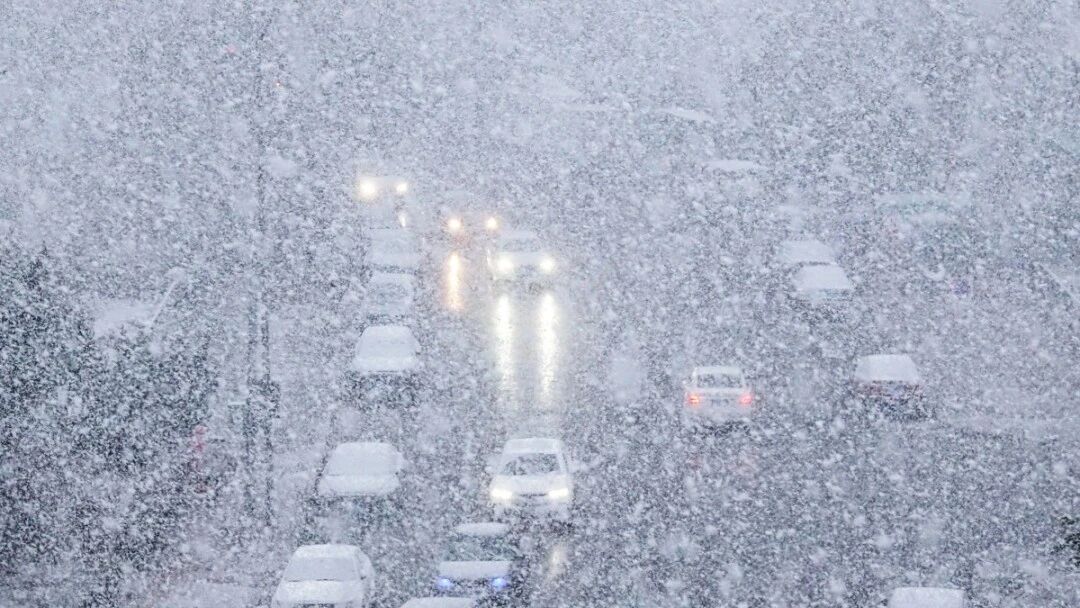
Large swathes of China are bracing for a powerful cold wave that began over the weekend, unleashing sharp temperature drops, gale-force winds, widespread snowfall, and freezing rain from Saturday through Wednesday. The extreme weather has prompted local governments to halt classes and activate emergency protocols, media reports confirmed on Monday.
Meteorological Alerts Issued Nationwide
China’s National Meteorological Center (NMC) sounded the alarm on Sunday evening, issuing a suite of warnings: a yellow alert for cold waves, a blue alert for heavy snow, and a yellow alert for icing. These alerts cover central and eastern regions—including the Huanghuai, Jianghuai, Jiangnan zones, and parts of South China—forecasting plummeting temperatures, fierce winds, and extensive rain-snow mixes from Saturday night to Wednesday.
CCTV News highlighted heightened risks in specific areas: Heavy snowfall is expected in parts of Shaanxi, Henan, Anhui, and Hubei provinces, while freezing rain and ice buildup threaten Henan, Anhui, Hubei, Hunan, Guizhou, and Chongqing Municipality, endangering transportation and daily life.
Education and Transport Disrupted
As the cold wave and snow intensified, provincial authorities moved swiftly to safeguard residents. In East China’s Anhui, education bureaus in multiple cities suspended in-person classes at kindergartens, primary, and secondary schools. Similarly, Central China’s Henan saw cities like Zhoukou and Zhumadian issue class suspensions due to heavy snow. In Jiangsu’s Xuzhou, primary and secondary schools, plus kindergartens, will remain closed for two days starting Monday, per CCTV, amid forecasts of severe icing and heavy snowfall.
Transport networks are also under strain. China’s Yangtze River Delta railway system will temporarily halt select passenger services from Sunday to Wednesday to mitigate risks from snow and harsh weather, announced China Railway Shanghai Group via its official Weibo on Monday. To prioritize safety, authorities will suspend certain high-speed rail routes from 8 am Monday to 8 am Tuesday, affecting segments of the Beijing-Hong Kong, Beijing-Shanghai, Shanghai-Chengdu, Xuzhou-Lanzhou, Hefei-Bengbu, Zhengzhou-Fuyang, and Hefei-Xinyi lines. Flexible adjustments—including speed limits, additional suspensions, service resumptions, or extra trains—will be made dynamically based on weather updates, the group noted.
Cross-Sector Coordination to Mitigate Risks
Meteorological agencies have ramped up collaboration with other sectors to tackle the crisis. In Beijing, Shaanxi, and Shandong, weather bureaus issued specialized alerts for road icing, snow accumulation, and low visibility to bolster traffic safety measures, per the China Meteorological Administration’s WeChat update.
Energy providers in Shaanxi, Shandong, and Xinjiang have taken preemptive steps to shield power grids and communication infrastructure from freezing rain damage. Agricultural departments in Henan, Shaanxi, and parts of Hunan issued tailored guidelines to protect crops, greenhouses, and livestock from cold-related harm. Local meteorological offices also partnered with health, emergency management, and public security teams to enhance public alerts and emergency readiness.
Public Safety Advice Issued
The Ministry of Emergency Management, via its WeChat account, shared expert recommendations for staying safe. Residents are urged to track real-time weather warnings and take measures to stay warm, with particular caution for vulnerable groups—elderly individuals, children, and those in poor health—who should limit outdoor exposure to avoid respiratory or cardiovascular issues.
Drivers and pedestrians face added hazards: Rain, snow, and ice will make roads slick, so pedestrians must tread carefully, and drivers should slow down, check tire traction, and exercise extra caution on bridges, overpasses, and other ice-prone areas.