
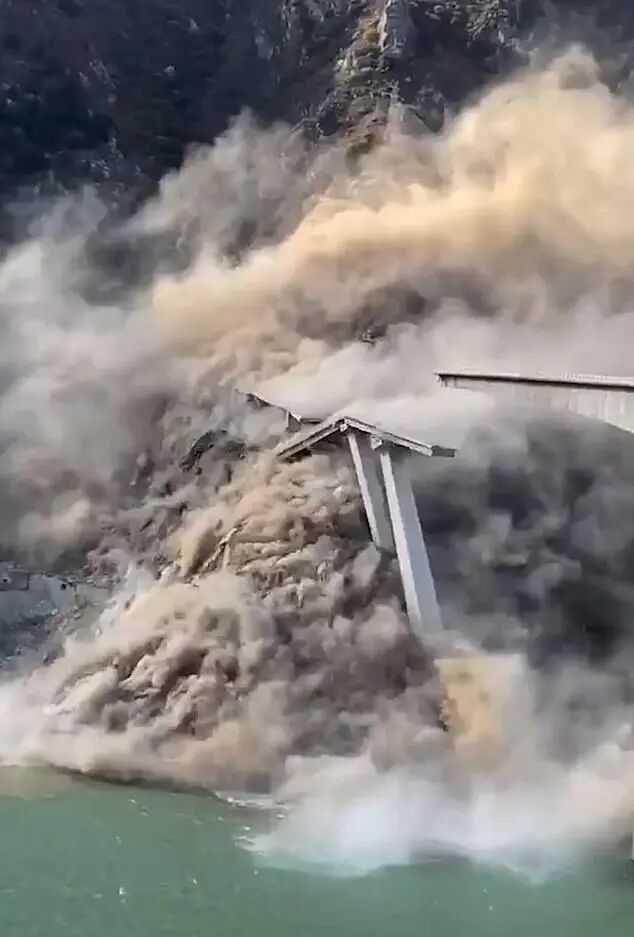
In Sichuan province, China, a recently opened bridge collapsed onto a mountainside, sending clouds of dust and large chunks of concrete tumbling into the water beneath. Dramatic footage of the partial failure of the Hongqi Bridge spread rapidly across Chinese social media on Tuesday.
The 2,486‑foot‑long structure, linking central China with Tibet, had already been shut down by local authorities the day before when cracks were spotted both in the bridge itself and in adjacent slopes and roads. By Tuesday afternoon, conditions deteriorated sharply; landslides struck the mountainside, ultimately causing the span to give way. Officials cited these worsening geological factors as the trigger.
Videos posted online captured the dramatic moment the bridge broke apart and plunged into the open water. Dust billowed into the air as massive sections of concrete slammed into the slope. Debris piled up along the mountainside, though the far side of the bridge remained standing above the river. Remarkably, no injuries were reported.
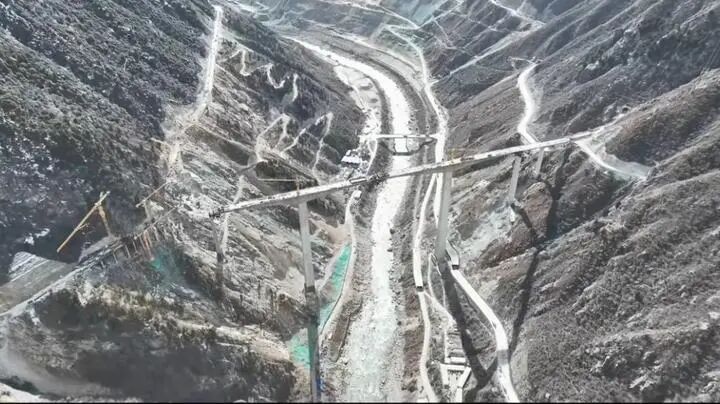
Built by the Sichuan Road and Bridge Group, the Hongqi Bridge was completed only earlier this year. Sichuan is a region prone to strong seismic activity and is traversed by the highway that passes through areas badly damaged in the devastating 2008 earthquake, which claimed around 70,000 lives. Poor construction standards were partly blamed for the scale of that disaster, and Tuesday’s unexpected collapse has revived concerns about whether adequate geological studies were conducted before building began.
Officials have sought to minimize the significance of the event, calling it an isolated natural occurrence. This incident follows closely on the heels of another serious accident in August, when a railway bridge under construction in Qinghai province collapsed, killing at least 12 workers.
Completed in January, the Hongqi Bridge was a flagship project within China’s drive to boost economic development in less prosperous mountainous zones — intended as a showcase of the nation’s infrastructure prowess. China has poured substantial resources into expanding its road, highway, and rail networks. In September, the country opened the world’s highest bridge in neighboring Guizhou province: the Huajiang Grand Canyon Bridge. Rising about 2,050 feet above the Beipan River, the structure took three years and eight months to build, linking key tourist destinations and slashing crossing time from two hours to roughly two minutes.